What are standard bank loans payday loans How much do you repay the loan

PFA Siliguri - Animal Checkup Camp

E-mail Print PDF
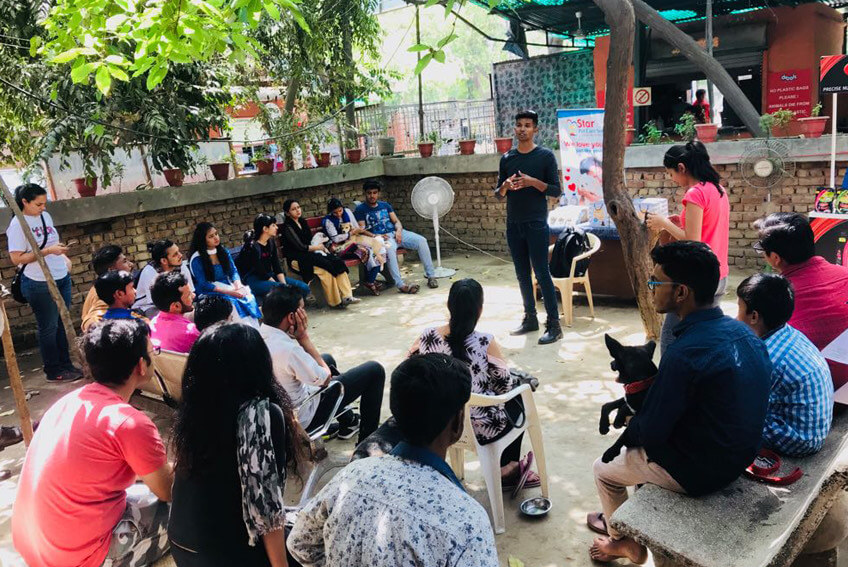
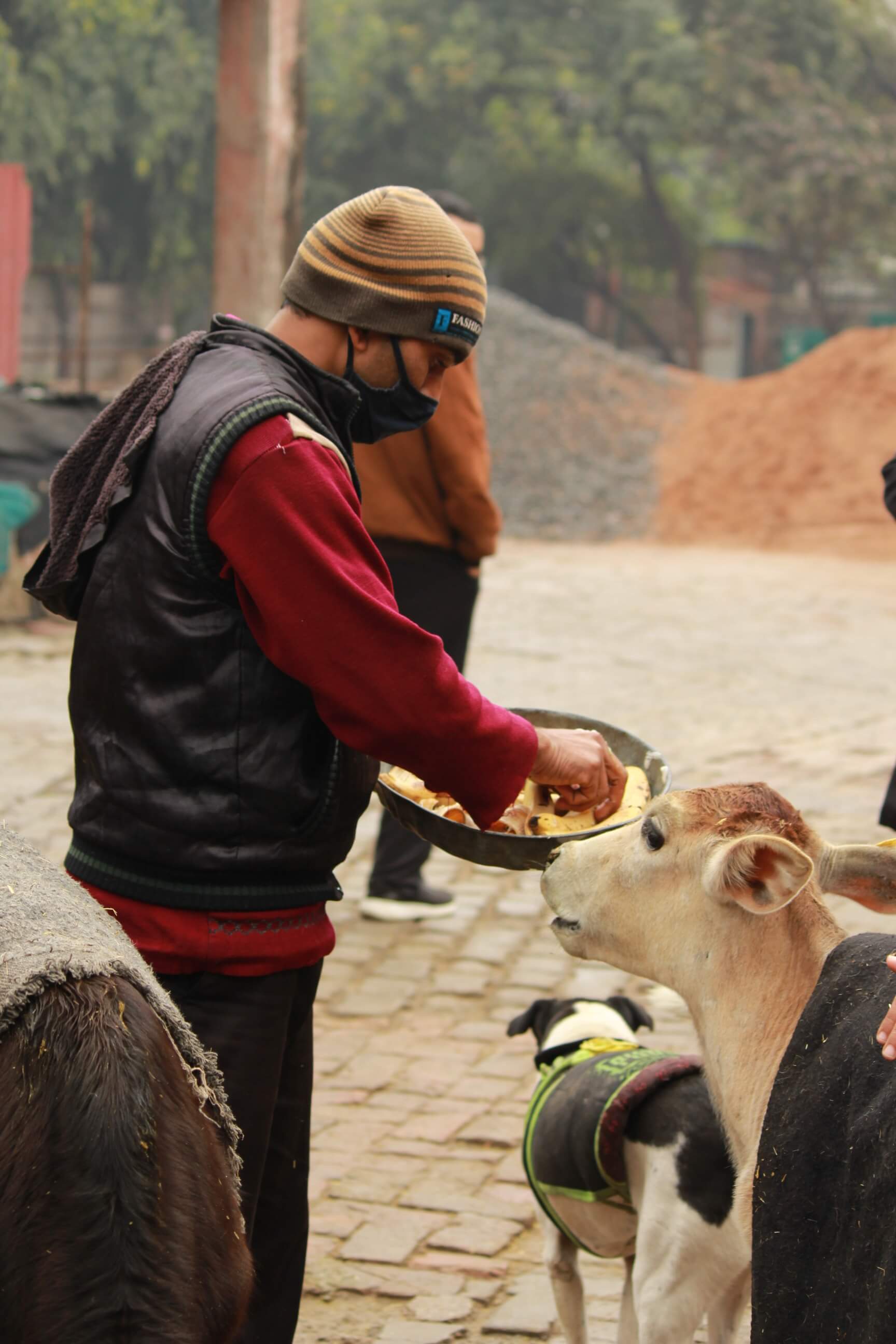
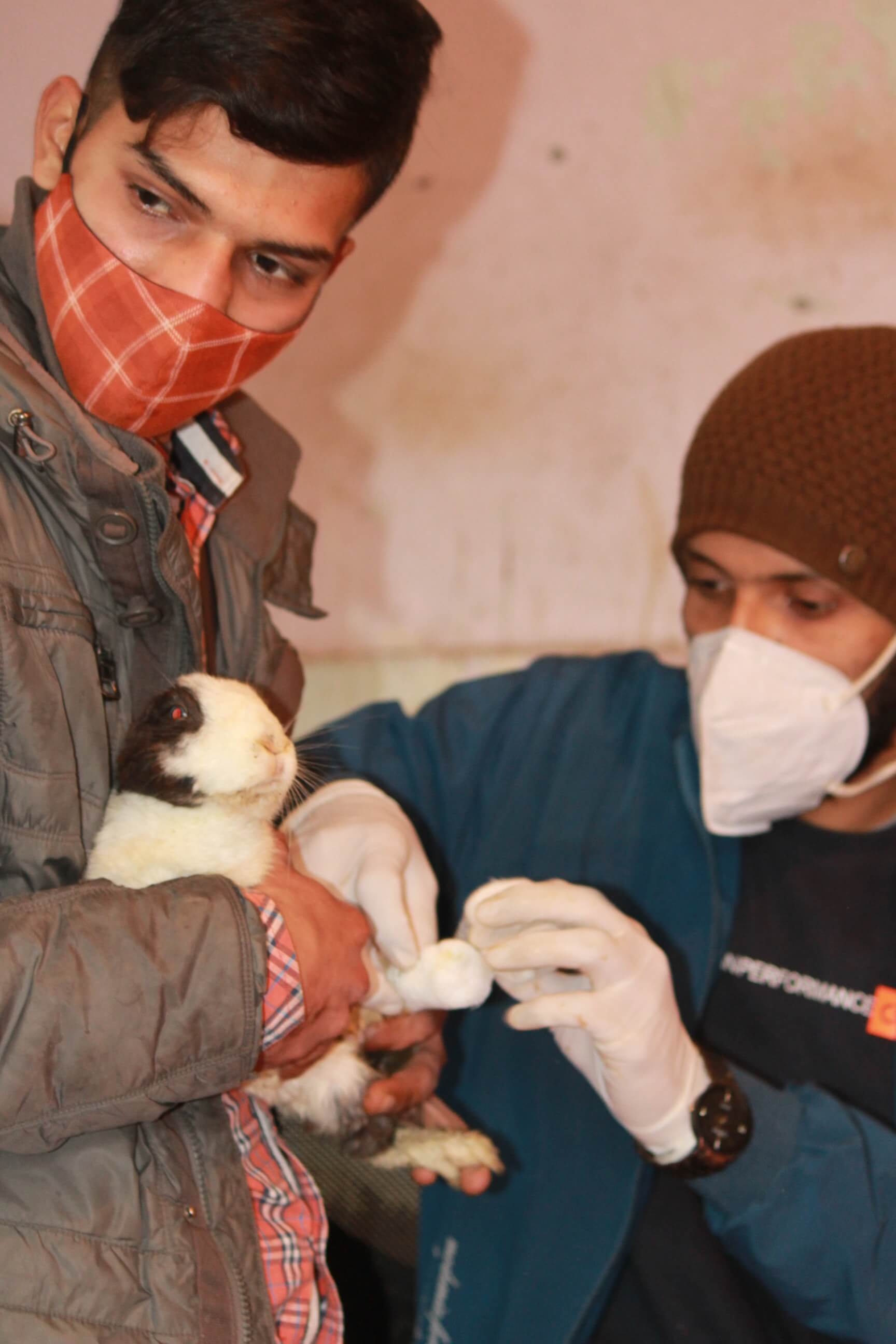
Ref Gallery PFA SiliguriPFA Siliguri organised a free animals check up camp at Betgara Village near Salugara 10 km from Siliguri on 11th September, Sunday. Many villagers coming from Betgara, Taribari, Singhighora, Dimdima. Busty along with their domestic Cow, Hen, Indian species Dog, Pig, Goat, Ginipig. Approximate 50 animals were treated by VET Dr. Molay Maity with the help of PFA  members. Medicine was provided to villagers free of cost by PFA. [Image Gallery]
Last Updated on Friday, 16 September 2011 22:21
 

The Meat You Eat!

E-mail Print PDF

When you bite into a hamburger or chicken sandwich, what do you think that this grass eating animal was eating before it died? Most likely it was a mixture of ground up eyeballs, anuses, bones, feathers, and euthanized dogs. Most animals that we eat spend the entirety of their short lives in factories eating recycled meat and animal fat. These herbivores have been turned into carnivores thanks to our process of 'waste removal' better known as rendering.

Every day thousands of pounds of slaughterhouse waste such as brains, eyeballs, spinal cords, intestines, bones, feathers or hooves as well as restaurant grease, road kill, cats and dogs are produced. From this need for large waste disposal came the development of rendering plants. Rendering plants recycle the dead animals and their wastes into products known as bone meal, and animal fat.  These products are sold to the companies that grow animals for meat or milk cattle, poultry, swine, sheep and put into their feed. Each slaughterhouse has a privately owned rendering plant nearby.

Last Updated on Friday, 16 September 2011 22:31
 

Myths about Owls

E-mail Print PDF

Every week my People for Animals team find someone selling owls. He will usually have one dehydrated live owl in a cage, a bird that will be dead by the evening. He will also have dozens of dirty small tins full of dehydrated owl feet. These are sold as taveezes. I used to think that it was a Muslim superstition until I caught a Hindu middle class, educated man with three dead owls. He said his son had a hole in his heart and he had been told to bring three dead owls to the "tantrik baba" - and five thousand rupees, for a cure. He is in jail now for violating the Wildlife Protection Act 1972 - all owls are now protected by the Act.

Unfortunately the owl, which is such a clever and useful bird has become a victim of both Muslim and Hindu fake babas. Because some of them live in the cavities of old trees of cemeteries, dense forests and sacred groves, which are never cut, they are projected as spirits to gullible people. In Meghalaya the Garo Hills Tribe believe that an owl calls out at night when a person is going to die. In actual fact, when an owl cries out, which is rare, it is a mating call.

Last Updated on Sunday, 18 September 2011 22:58
 

Is Human Controlled By Worms?

E-mail Print PDF

Are you a worrier? Do you have violent mood swings? Researchers studying behaviour and gene activity in mice have found that bacteria in the intestines appear to shape brain and personality development. Hundreds of species of bacteria call the human gut their home. In fact our bodies are so little “human” inhabited as they are by worlds of bacteria, worms and other parasites. While scientists have known for years that these colonists influence our state of health by releasing toxins into our blood new studies say that gut bacteria can even mess with the mind, altering brain chemistry and changing mood and behaviour. Research at the Genome Institute in Singapore found that gut microbes controlled the activity of a gene important to the production of serotonin, a key brain chemical. A study undertaken to assess behavioural differences between bacteria-free mice and mice with intact gut bacteria found differences in activity and anxiety levels. Bacteria-free mice were more daring and less anxious. Most mice tend to seek refuge in dark areas—but not the germ-free mice who roamed freely in open areas.

Last Updated on Friday, 16 September 2011 22:21
 

Horses and Polo

E-mail Print PDF
"God despises money. Look at the people he gives it to." It's amazing how vulgar people become as they get rich. The crassness first shows up in their home and clothes which both become laughable. Next in their food which unfortunately is not laughable. Bangalore's wildlife department recently raided restaurants and found monitor lizards, partridges, deer, black buck, peacocks and hares-- all endangered Indian species on offer to wealthy diners. The illegal trade in vanishing species flourishes as demand for exotic meats rises.  The nouveau riche pay silly sums to impress. You read about spoilt kids of self made men bragging about visiting Singapore and Kenya to devour monkeys and zebras.
Last Updated on Friday, 16 September 2011 22:18
 

Rescued Dogs

E-mail Print PDF

Kuber was picked up by Revathi five months ago and brought to my house because she works here and could keep an eye on him. He was the runt of a street litter and when she found him, he had one leg broken and he was covered with fleas and ticks. The doctors held out no hope and even less when they discovered that because of his starvation and other travails, his heart had enlarged.

Kuber grew and grew and turned into the loveliest puppy. He frolicked the whole day, stopping to breathe because his heart wouldn't keep up with his body. He became the pet of the house, and two of the older dogs fought to be his mummy. When I played with him and then walked away, he curled around my legs and refused to let me move. Yesterday, he came and played with me while I worked at the computer. He lay down after a little while and I went into the next room for lunch. When I came back he was dead. His heart had simply given out.

Last Updated on Tuesday, 13 September 2011 19:37
 

Do Your Bit

E-mail Print PDF

One of the things that most irritates me is people telling me about awful instances of cruelty that they have witnessed-without doing anything about it-except of course to write in to me  as if I was a giant dustbin in which to purge their guilt and grief.  When they receive the written equivalent of a slap on the face in reply, the invariable defence is, it's easy for you to do things but who'll listen to me?

Do you know what the greatest power in the world is? It is compassion. Where does my power come from? Not from a name, or position or wealth or title-it comes from my willingness to do something about issues that I feel strongly about.  What stops anyone from doing the same?
 
The ability to take action is assailed by two assumptions. First, that society has become too big and too complex for an individual to make a difference-unless that individual has extraordinary wealth or heads a major organization. Our societies consist of tens or hundreds of millions of people. Our governments are tied down in bureaucracy and fear doing anything that could cost them votes. Multinationals with big advertising budgets control public opinion. How then can a single individual possibly bring about any significant change?
 
The second assumption is that our lives are essentially meaningless, that the pursuit of self-interest is the only reasonable goal for anyone, self-interest being defined in narrow materialist terms. So money equals success equals fulfillment.
 
Except that isn't the case. I have just finished reading a book about someone whose life and work challenges both these assumptions.
 
Henry Spira was enlisted into the animal liberation movement by a cat he was dumped with by a migrating friend. Previously he had championed the people's revolution in Cuba, and taken part in the labour union struggle in America. His move to animal rights was a natural extension of his empathy with the oppressed and exploited as he realized that it is animals whose suffering is the most intense, widespread, expanding, systematic and socially sanctioned of all.
 
Using the insights gained from decades of working for the weak and exploited, Henry Spira became one of the world's most effective animal rights campaigners. I am going to give you the fundamental principles that he used to make a difference. Imbibe them, live them and your life too will be about more than just consuming products and generating garbage.
 
Begin by understanding that if there is no struggle there is no success. Power concedes nothing without a demand. It never did, it never will. The fundamental lesson is that the meek don't make it. But audacity must be augmented with attention to detail, with an awareness of social attitudes, power relations and scientific possibilities. So while you may be brave and bold, you must also know what you're talking about. For example when you display the courage to stop an obviously overloaded cart, you need to back it up with knowing the law that forbids animals from being overloaded. You need to know that you can call the police for help; you need to know how to check the animal for injuries, and the number of the shelter where the animal can be taken if he requires treatment. You need to be able to convince the owner that treating his animal well is in both their interests. You need to be able to mobilise crowd support for your action so that there are people to help unload the cart, bring food and water for the animal and keep an eye on the unloaded goods till they can be collected.
 
None of this is difficult. I have written a book on first aid that you can keep handy and a pamphlet of the laws is available free from PFA.
 
The animal welfare movement does not require bleeding hearts, what it needs is serious people who care enough to educate themselves and use that knowledge creatively.
 
Like Henry Spira, for years before him, animal groups had been protesting against animal testing without any success. He realized that it was vital to have a victory no matter how small, to encourage its own supporters to believe in the possibility of change and to gain credibility for the cause with the outside world. He targeted a researcher in a Washington Museum who for years had been mutilating cats to study the effects on sexual behaviour. Not only was the topic of no human benefit or interest, it used an animal that has a high 'cuddle' factor-most Americans think of  cats as pets. Spira obtained detailed data on the nature of the experiments from the government funding agency that are required to provide this information on request. He first petitioned the museum which stonewalled. He then launched a public campaign. He took the facts to a few newspapers - one of whom ran a small story. He mailed museum trustees and benefactors, the funding agency and Members of Congress. He even mailed the researcher's neighbours. Spira rallied other animal groups into picketing the museum and visitors were handed flyers showing
 
Cats with their heads shackled. Pretty soon, the museum realized it had a problem that was not going to go away. The funding agency gave notice to the researcher, the scientific community that normally closes ranks in the face of any challenge became queasy around this issue, and within just a few months the experiments were terminated. Animal rights had won its first victory.
 
Effective actions are the result of people gaining confidence in their ability to effect change. The more you do, the more you can do. When he learned that Amnesty International had sponsored a Danish group of researchers to burn pigs with hot metal rods and give them electric shocks to find out whether torture could be conducted without visible traces, Spira did not hesitate to take it on. Although in essence, Amnesty's work to help victims of government and  police torture shares the same values as the animal movement, it was precisely  because of is high moral standing, that its use of animals as lab tools was unacceptable and a betrayal of its own principles.  In this context it is telling that one of Amnesty's own leaflets says, ' torturers in various countries insist on being addressed as doctor instead of as sadistic criminals'! When Amnesty kept stalling on the issue, Spira finally threatened to go public. Amnesty complained that he was doing the same thing to them as they were doing to torturers in South America. Exactly, replied Spira, because you are playing the same role that they do! In 1978, Amnesty International pledged that the organization would not sponsor any medical experimentation using animals.
 
Position issues as problems with solutions. This is best done by presenting realistic alternatives. Offering solutions makes it a positive rather than entirely negative campaign. When Spira decided to go after animal testing by the cosmetic industry, what he sought was not just some companies reducing or replacing animal tests - what he wanted was a change of attitude within the industry so that animals would never again be used. To a large degree he succeeded. Kicking off his campaign with a brilliant full page ad against Revlon's use of rabbits into whose eyes chemicals are poured to test shampoo, he asked readers to write in to Revlon demanding that the company fund a research project to find non-animal alternatives. The company received over 4,000 letters within the first week itself. Supporters asked their neighbourhood stores not to stock Revlon. A 12 year old boy persuaded 3 small department stores to stop selling Revlon cosmetics.
 
Revlon sales and stocks crashed. Competitor Avon responded by reducing its tests and the industry published a list of corrosive substances that need not be tested.  Within the year, Revlon became the first cosmetic company to fund a $750,000 research project to find non-animal alternatives to testing cosmetics. Other companies followed suit and as a result of this initiative, many cosmetics giants have been able to completely give up animal testing. On its own, the animal movement could never have funded the research that made this possible.
 
This victory over Revlon did not require wealth or the leadership of a large organization. It simply came from creatively applying insights gained from decades of working on the side of the weak and exploited.
 
Activism has to be result-oriented. Raising awareness is not enough. Awareness follows a successful campaign and a successful campaign will have achievable goals. So set goals that are achievable. Whether it is educating the police in your local thana on the animal protection laws, or getting your neighbours to contribute their food leftovers for homeless animals or writing an animal-related column for a school/club/ local newspaper, or turning 5 people a month vegetarian. Bring about meaningful change one step at a time. Don't assume that only legislation or legal action can solve the problem. In fact as far as possible avoid bureaucracy. Once you get going, you will find you can win victories, you can fight government, and you can make an impact.
 
Don't suspect motives. If someone is helping you achieve some good, then you don't attack their motivation. It doesn't matter even if they are helping only to look good themselves-in fact, all the better.  There should be more people who believe that promoting the cause of the weak and defence less will advance their own careers.
 
Fighting for animals is not easy. And it's just as difficult for me as it is for anyone. We are seeking a revolution in people's thinking that animals are not edibles or lab tools. We are asking people to extend their moral horizons to accept the notion of fair play. Animal activists are called terrorists. If you oppose needless violence to animals, does that make you a terrorist? The trick is not to give up trying. It's crucial to have a long term perspective. Keep looking at the big picture while pushing obstacles out of the way.
 
Nor does it feel like a sacrifice. I do it because it's what I really want to do, want to do most and feel most alive while doing. It's more effective if one does it if one really feels good about doing it, if one gets up in the morning just raring to pick up where one left off the night before-as opposed to doing it for others, doing it because it should be done or because it's the right thing to do.  What impels me is not a sense of duty but a sense of joy.
 
And that's why if you are sensitive to animal suffering, I urge you to action. People with a purpose, a mission, may not have material comforts but they find life fulfilling and enjoyable. Seldom are they bored or at a loose end.  They find meaning in their life by living in accordance with their own values.
 
They live by the Henry Spira principle: Let's do what we can today and then do more tomorrow.
 
Come, join the action.
 
-Maneka Gandhi
Last Updated on Tuesday, 13 September 2011 23:30
 

The State of Our Country

E-mail Print PDF
As the number of people in the world swell to 8 billion, the jobs are shrinking just as fast. Every ten minutes 2,500 people lose their jobs. The chances of children born today getting employment are very bleak. Every government has to grapple with this problem. In order to prove that the jobs exist but there are no people to fill them we keep inventing higher and higher degrees that they need to have - first it was a BA, then MA, then B Ed, then Phd, now it is MBA. However no matter what the degree level is, it is largely irrelevant because the basic education offering of our colleges have not changed in 50 years except to add Information Technology and Astrology. Arts have History/Geography/Literature/Sociology and Political Science etc and Sciences has Physics, Chemistry/Biology and that completely useless subject Zoology. Most of these subjects create teachers to teach these subjects.
But the needs of India have changed. The path of the economy has changed, the number of people have increased a hundred times, the land holdings have dwindled, our farmers have exhausted the green revolution and bled it white, pesticides have killed off most of the productivity, thousands of species of animal and plant have disappeared making life much difficult, water has disappeared , the weather is far more variable, the attitude of the village is no longer that of bucolic contentment....education has to be changed to deal with all these new problems, new desires. We have the largest number of schools in the world - how many people have benefitted from them? We need to teach new subjects - if not at the school then at the college level.
Last Updated on Tuesday, 13 September 2011 23:29
 

Vanishing Acts

E-mail Print PDF

Every year I find myself at the annual cactus and succulents show in Delhi. This is a group of plants that is utterly beautiful and intelligent.   My favourite among them are the Lithops or living stones. These plants look exactly like the pebbles that surround them in the desert.  Both plants and animals use colours and shapes in a way that keeps them hidden. How does a being become invisible in plain sight, airbrushing himself out of the frame in a way? While humans stand out like sore thumbs, most animals and insects have mastered the art of standing right in front and yet invisible. One way is to use colour camouflage called crypsis, where their coloration makes them indiscernible from the background and undetected. Colour is used in two ways: - concealing coloration and disruptive coloration.

Last Updated on Monday, 12 September 2011 00:27


Page 88 of 120

Heads & TailsAltruism among Animals
Maneka Gandhi

Have you seen pictures of tiger mothers suckling piglings , or monkeys defending dogs ? Someone has sent me the pictures he had taken of a hurt monkey on the road being protected by another monkey w [ ... ]


Heads & TailsAnimals in Rural India
Maneka Gandhi

A week ago , I was in a little village called Deeppur in Shahjahanpur in Uttar Pradesh , campaigning for the election. Suddenly , I saw an elephant , a young boy sitting on her back stabbing her wit [ ... ]


Other Articles

Newsflash

Corporates

Lobby for animal welfare to   become a part of your   company CSR
Help us to develop an   alliance with your company
Donate